Malé, Maldives – A noticeable rise in the use of English among young people in the Maldives is prompting renewed discussion about the future of Dhivehi, as educators and community leaders highlight a gradual shift away from the country’s native language.
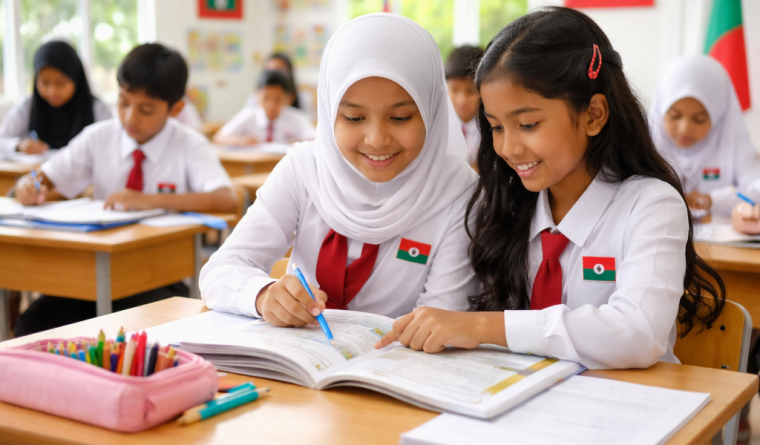
Observers note that many Maldivian youth are increasingly communicating in English in everyday settings, including at school, on social media, and even within peer groups. While bilingualism is widely seen as an advantage in a globalised world, concerns are emerging about the declining use of Dhivehi, particularly in informal communication.
Education experts point to the structure of the national education system as a key factor influencing this trend. English is the primary medium of instruction in most schools, exposing students to the language from an early age and making it their dominant mode of communication in academic environments. As a result, students often feel more confident expressing themselves in English than in Dhivehi.
The influence of digital media and global culture has further accelerated this shift. Social media platforms, entertainment content, and online communication are largely dominated by English, shaping the language preferences of young users. Many youth adopt English not only for convenience but also as a way to connect with international audiences and trends.
In addition, societal perceptions play a role. English is often associated with higher education, professional success, and social status. Some young people view speaking English as a sign of modernity and global awareness, while Dhivehi may be perceived as less relevant in certain formal or professional contexts.
However, linguists and cultural advocates warn that reduced use of Dhivehi could have long-term implications for national identity and cultural heritage. Language is seen as a key component of cultural expression, and a decline in its everyday use may lead to the erosion of traditional knowledge, expressions, and values.
Efforts are underway by educators and organisations to promote the continued use and appreciation of Dhivehi among youth. These include incorporating more Dhivehi literature in school curricula, organising language-focused events, and encouraging its use in media and public discourse.
Experts emphasise that the goal is not to discourage English usage, but to strike a balance that preserves the importance of Dhivehi while embracing the opportunities that come with global communication.
As the Maldives continues to navigate an increasingly interconnected world, the challenge remains to ensure that linguistic progress does not come at the cost of cultural identity.