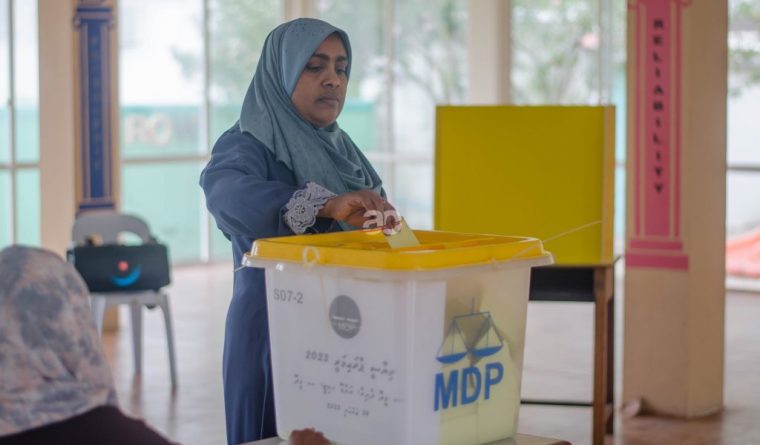
The Maldives has made notable progress in its democratic evolution, embracing multi-party elections and expanding civic freedoms. Yet beneath these milestones lies a persistent challenge: voter apathy. The 2024 parliamentary elections saw a turnout of 76.27%, a figure that, while seemingly adequate, masks deeper issues of public disengagement, eroding trust in political institutions, and a growing sense among citizens that their participation yields little impact. For democracy to flourish, it must be more than a procedural exercise—it must be inclusive, responsive, and genuinely reflective of the people’s will.
This concern was even more pronounced during the 2023 presidential election, where only 75% of the 282,395 eligible voters cast their ballots—the lowest turnout in the nation’s electoral history. In stark contrast, the landmark 2008 multi-party presidential election drew 86.5% of voters, signaling a strong public appetite for change. In 2023, however, many chose to abstain, suggesting that none of the eight candidates offered the transformative leadership they were seeking.
A 2023 article by Maldives Financial Review, titled “Historic Low Voter Turnout in Maldives—What’s Really Ailing the Politics?”, underscored the significance of this decline. Despite the deployment of 570 ballot boxes across the country, the low turnout reflected a deeper discontent. Many non-voters viewed their silence as a form of protest against the repetitive cycle of major party dominance, which they felt had failed to deliver meaningful progress. Others saw this disengagement as harmful to the democratic process. Ultimately, the lack of majority support led to a runoff election, as no candidate secured the required 51% to win outright.
The roots of voter apathy in the Maldives are complex and interconnected. Many citizens feel alienated from political decision-making, convinced that their votes do not translate into real change. This disillusionment is reinforced by recurring political instability, unfulfilled promises, and the continued dominance of familiar figures who often overlook pressing public concerns. The perception that politics serves a narrow elite rather than the broader population has further deepened public skepticism.
Local governance has also struggled to build trust. Concerns have been raised—both in media and across social platforms—about the requirement for voters to cast ballots based on their permanent address, even when they have relocated. This practice is widely seen as unfair and disconnected from the realities of modern mobility. The lack of meaningful engagement between elected officials and their constituents has only widened the gap, weakening the democratic fabric.
Public participation is further hindered by social pressures and fear of retaliation. Citizens who engage in political activism—whether through protests, advocacy, or online platforms—often face harassment, criticism, and even legal consequences. During the 2023 presidential campaign, for example, several civil society advocates who questioned the transparency of campaign financing were subjected to coordinated online attacks and threats. Some were silenced through financial pressure or intimidation from employers and community leaders. These incidents reveal how civic expression is frequently suppressed, and how political actors may exploit vulnerabilities to discredit dissenting voices.
Addressing voter apathy requires a concerted effort to rebuild public trust and foster a culture of civic engagement. Strengthening civic education across all levels can empower citizens to understand their rights and the workings of governance. Media literacy is equally essential to help people navigate misinformation and engage in informed discourse. Platforms for dialogue—such as community forums, town halls, and digital spaces—can provide opportunities for citizens to voice concerns and hold leaders accountable.
Political institutions must also evolve. Parties should embrace transparency, inclusivity, and responsiveness, ensuring their platforms reflect the diverse needs of the population. Campaigns must move beyond empty slogans and offer substantive solutions to issues like economic inequality, environmental sustainability, healthcare, and justice. Above all, elected leaders must demonstrate a genuine commitment to listening and acting on public feedback.
Voter apathy is not a passive condition—it is a response to systems that fail to inspire confidence. Revitalizing democracy in the Maldives demands more than procedural reforms; it calls for a transformation in political culture. When citizens feel heard, respected, and empowered, participation becomes a natural part of civic life. Only then can democracy move from symbolic gestures to meaningful representation, ensuring that every vote counts and every voice matters.